Learn the rules like a pro, so you can break them like an artist.
From beginner to winner.
The best strategy is always: keep calm! However badly it is going for you — stay cool and trust your comeback. Why? Because your brain works less well under stress, and you tend to make more of the wrong decisions.
Besides: it may well unsettle your opponent that you are still perfectly relaxed despite their strong advantage. Maybe they get stressed themselves, wondering whether they have missed something you are waiting for.
And if you do lose — be a good loser and say thank you for the good game. The game is everything!

80% skill – 20% luck Backgammon takes a few minutes to learn and many years to master. Because there is a whole range of strategies — starting with the skilful use of the doubling cube — that help you win a game, a match or an entire tournament.
There are plenty of books on particular subjects these days, but the best read is still Paul Magriel's book "Backgammon".
Here we want to go into the five basic strategies, which can be used and combined as the game unfolds — the Big Five:
1. Running 2. Holding 3. Priming 4. Blitz 5. Back Game
Strategic basics At heart backgammon is a race, won by the player who bears all their checkers off first. Counted from the starting position, each player has 167 steps to travel at the start of the game to get every checker off. That number of steps is called the pip count. If you are hit, and have to start again from the very back with that checker, your pip count grows and you fall behind in the pure race.
Working out your own and your opponent's pip count in your head during a game is essential for doubling and for many other strategies at professional level, but it does take some practice and experience. To begin with it is enough to guess roughly who is ahead and who is behind, and to keep an eye on your opponent's position,
So, on to the five basic strategies:
1. Running game The aim of the running game is to play all your checkers into your home board as fast as possible and bear them off. The strategic advantage is there when you need fewer steps overall to bear all of your checkers off than your opponent (pip count).
This strategy is called for when you have already played all of your checkers past your opponent, or when it is likely that you can do so next.
For that it matters to judge the position of your own checkers and your opponent's, and to decide whether you are ahead. If your opponent has fewer steps in front of them to bear everything off, this strategy holds little promise for you.
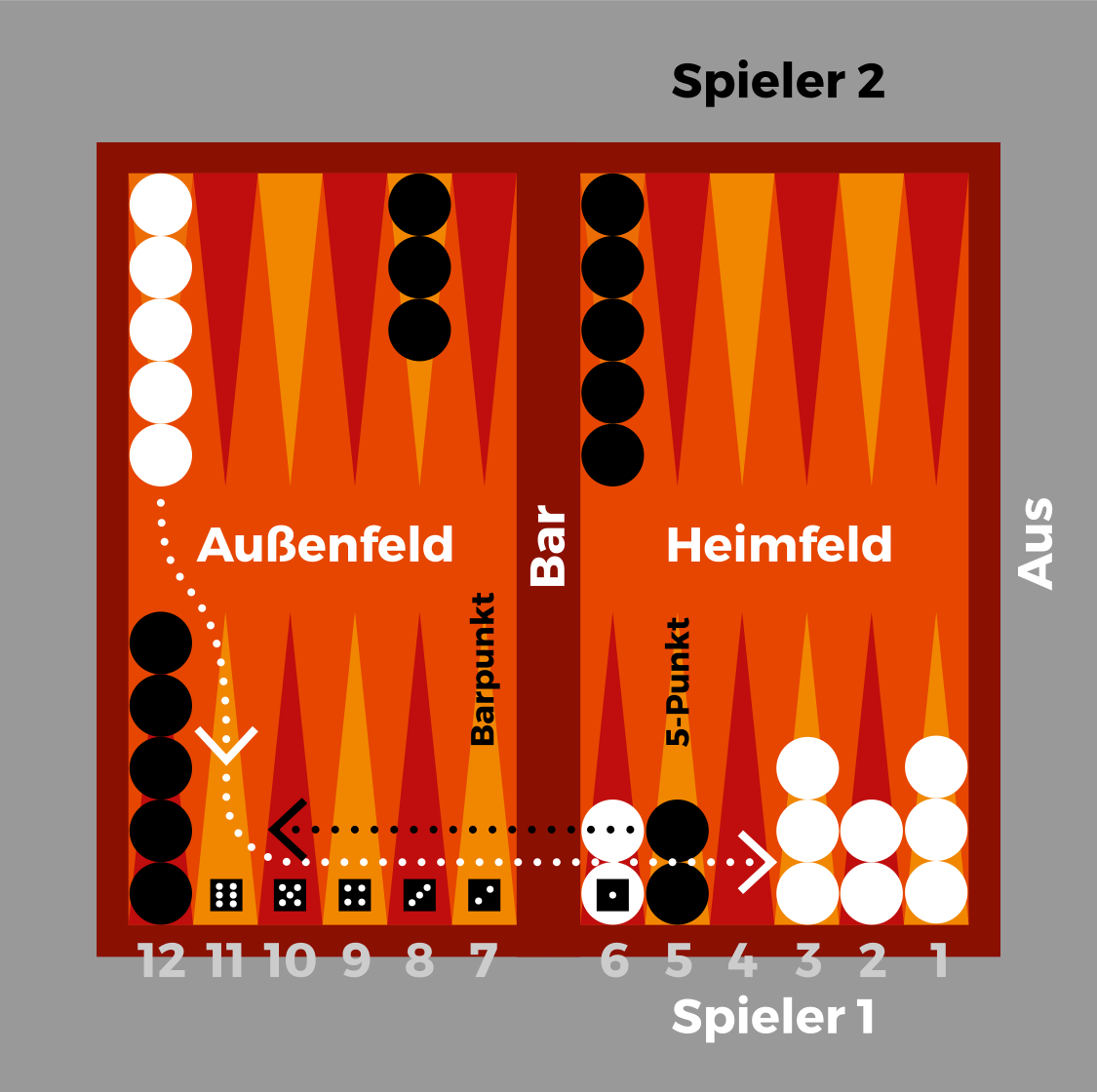
2. Holding game The idea of the holding game is to take possession of a strategically important point deep in your opponent's territory — their 5-point, say, from which you control every point of their outer board, or their bar point, with which you block their big jumps (double 6) from the outer board into their home board. These two points offer the best chances of hitting one of your opponent's checkers as they play their checkers closer to home.
This strategy suggests itself when you are behind in the race, that is when you need considerably more steps to get off than your opponent.
Another important strategic element of the holding game is how your opponent's checkers are distributed. The more points they hold in their direction of travel in front of your holding points, the more chances they have to park there. Which makes it less likely that you hit them.
Example: Player 2 (Black) holds the 5-point and controls White's outer board with a direct shot (a hit with a single die is possible). Since White is ahead in the race, it pays to hold the 5-point.
3. Prime game When a player holds several points in a row (at least two checkers per point), that is called a prime. The longer the prime, the harder it is to jump the blockade. A 6-prime cannot be crossed at all.
A prime is therefore a good strategy for slowing your opponent down or stopping them altogether. If your opponent builds a prime of their own, it is very important to get past it early, before it grows longer. To do that you have to occupy points close to the prime.
One variant of this strategy is the prime vs. prime game. That is the case when both players hold a strong blockade, with opposing checkers likely to be stuck in front of it for a while. The deciding factors are the length of each prime and the number and position of the checkers trapped in front of them.
The odd thing about a prime vs. prime game is that the chance of winning rises for the player who is further behind in the race (the one with the higher pip count), because they have more steps — more time — to move other checkers before they have to break their prime.
As a rule of thumb: if neither of them can escape with their other checkers, the leading player's prime usually breaks first, and it becomes more likely that they get hit by their opponent's back checkers.
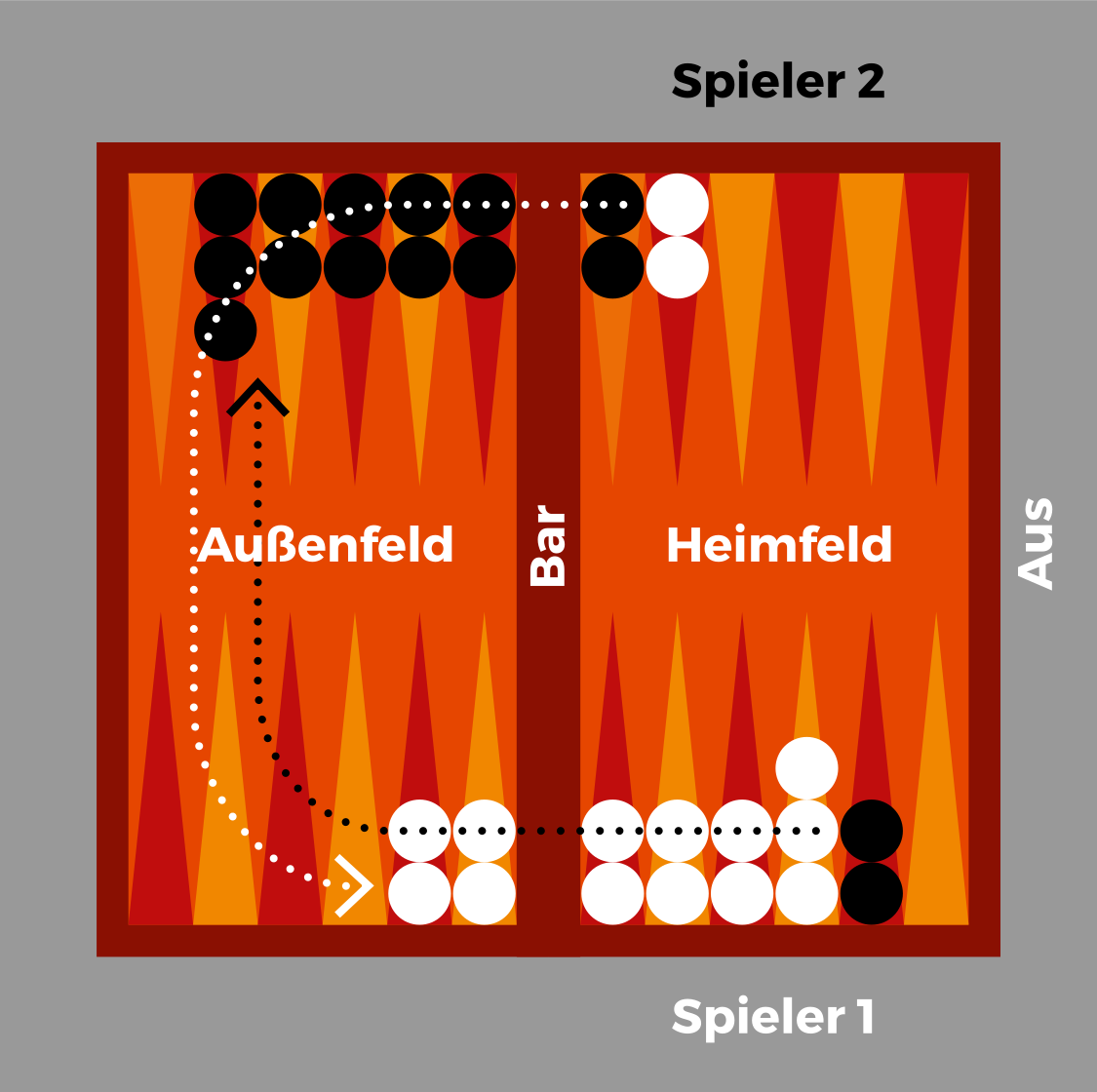
Example: Both players hold an unbreakable 6-prime. Player 1 (White) is well ahead in the race (the lower pip count) and will have to break their closed prime on the next move (in the worst case with 6-5, which gives up two checkers to a shot). So Player 2 (Black) has the advantage in the prime game.
4. Blitz The blitz is probably the most aggressive form of attack on your opponent's checkers. The aim is to hit your opponent early and close points in your own home board as fast as possible, which makes entering and escaping harder for them.
If you have hit at least one opposing checker and closed all six points of your own home board, entering is impossible for your opponent (a closed board). A successful blitz!
This strategy takes a lot of commitment and appetite for risk: as soon as your opponent enters again after your successful hit, you have to try to hit again and close further points in your home board. Often this strategy forces you to leave one of your own checkers alone in your home board and hope it is not hit on the way in, so that you can close the point next move or hit the re-entered checker again.
If the attack fails — because your opponent closes a point in your home board (an anchor), or because too many of your own checkers get hit (return fire) — it becomes more likely that you lose the game.
A blitz is not advisable when your opponent already has points closed in their home board and you can no longer afford to be hit yourself and sit out detention on the bar ;-)
A successful blitz raises your chance of a gammon (2 points). Which is why using the doubling cube at the right moment is an important part of the blitz.
If your blitz is going very well and you have already closed many points in your own home board, it is usually too late to offer your opponent the cube. An experienced player will certainly decline your double, because they cannot risk you winning a gammon after doubling — at least 4 points in a single game.
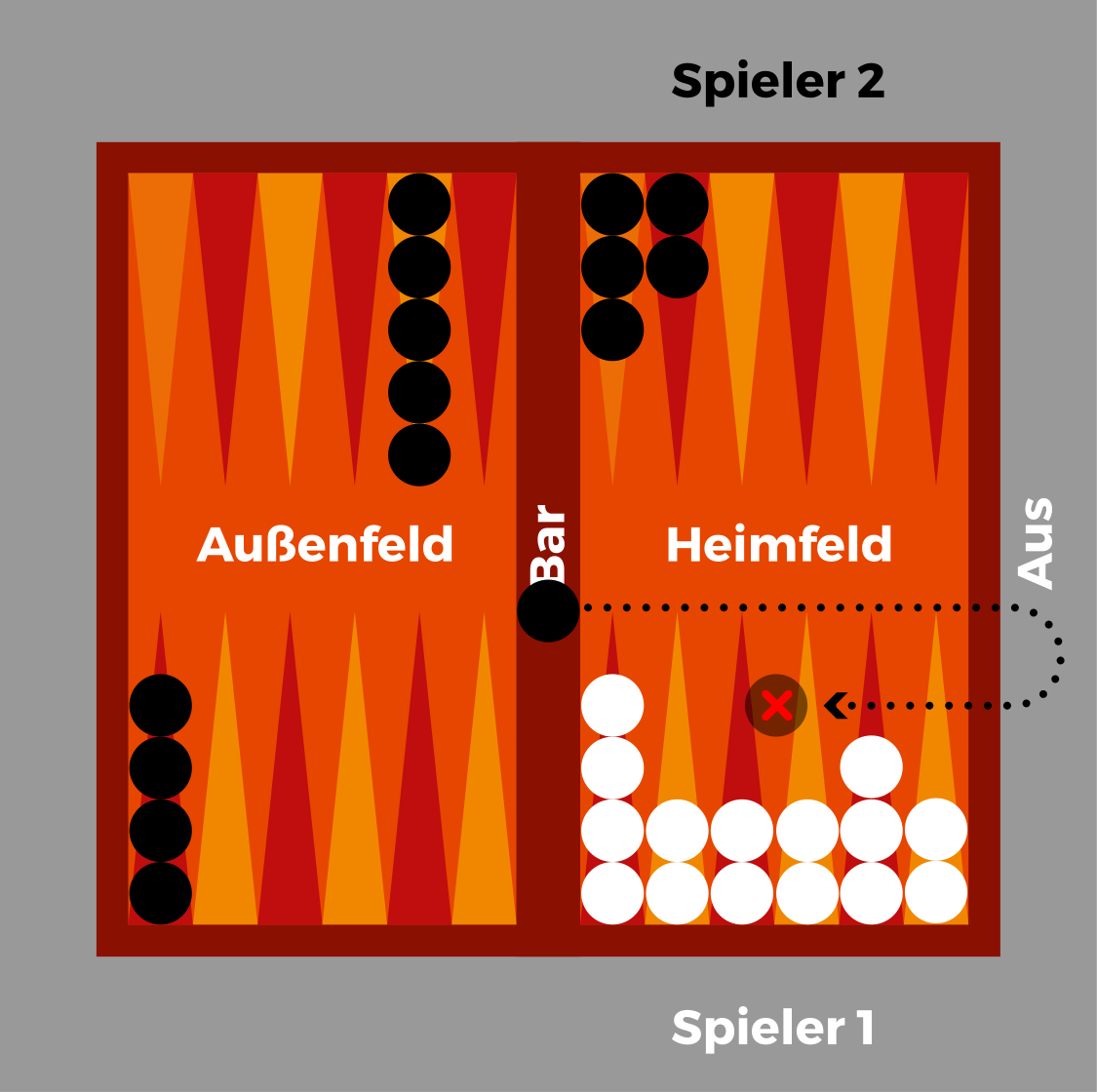
Example: Player 1 (White) has played a successful blitz and shut their opponent out with a closed board for the time being. Player 2 (Black) cannot enter again until Player 1 opens their home board by bearing checkers off.
If your blitz goes badly, or you have been hit often for other reasons, it is time to switch strategy — to the back game — and clear the field from behind.
5. Back game This strategy is worth considering when you are far behind in the race, have been hit repeatedly, and therefore hold at least two anchor points in your opponent's home board. The principle of the back game is to hold those two points for as long as possible, and to make it hard for your opponent to move cleanly into their home board without giving you one or even two shots.
If your opponent has to leave a checker alone near your back game position, it is very likely that you hit it from one of your two anchors and send it to the bar.
So while your opponent is busy avoiding a hit, you use the time to prepare for exactly that: you build your home board cleanly and get everything ready for a holding game.
A successful back game takes timing — being far enough behind in the race to be able to wait with your back game position until your opponent rolls awkwardly. Seen from your opponent's off tray, the best anchor points of a back game position are 1 & 3, 2 & 3 or 2 & 4.
A back game is not a particularly sensible opening strategy, since the chance of winning that way is under 20%. Played with care and good timing, though, it can improve your chances from a long way behind.
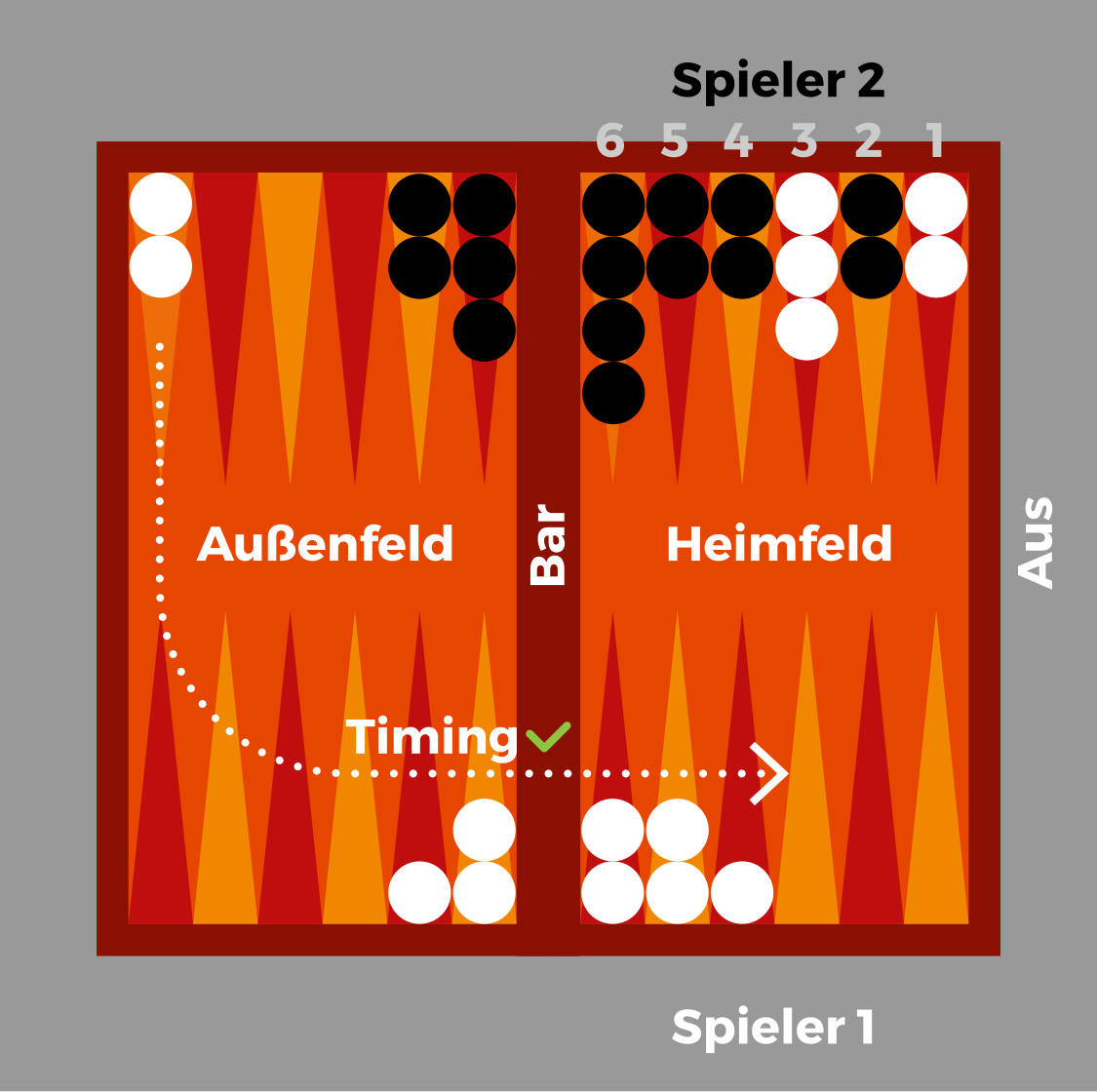
Example: Player 1 (White) has a good back game position on points 1 & 3 in the opposing home board. Their running checkers (builders) have enough distance (timing) in front of their own home board to hold the back game position and build stable primes towards home.
Rules of survival.
Learn how to play Backgammon like a pro – from basic rules to the magic of the Doubling Cube.
Tell me moreOf glory and gloom.
From the dark age to the golden era – the game of thrones and plebs like us has loads of gems and gossip to tell.
I'm curiousTrain that tongue.
Our glossary explains the most important terms of backgammon jargon.
Become a native speaker