In any case, the best way to learn backgammon is to play it.
Rules of survival.
The board The playing surface has four areas: home board, outer board, bar and off. The object of the game is to be the first to bring all of your own checkers into your own home board and from there off the board. Whoever manages that first has won. It is played with two dice and fifteen checkers each.
The “spikes” on the playing surface are called points. There are 24 of them — six in each of the four areas. They mark the steps on which the checkers are moved or set down.
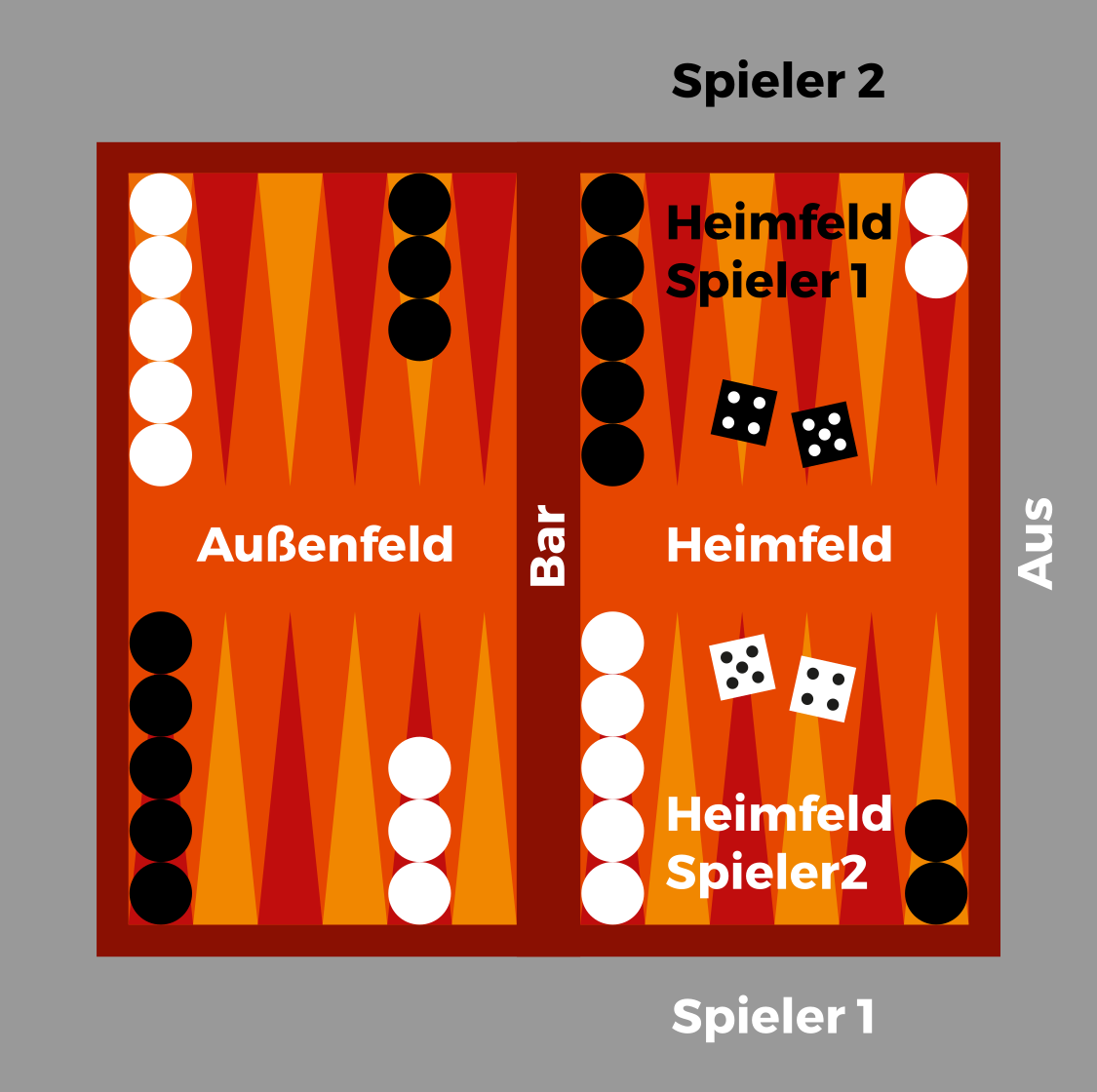
Each player starts with fifteen checkers, set out in the starting position above. For White, the home board and the off tray are bottom right; for Black both are opposite, that is top right. The bar in the middle is where hit checkers are parked. More on that later. Off you go!
Starting the game First you roll for which of the two players opens. Both players roll a single die into the home board at the same time. The player with the higher number begins. If both show the same number, the whole thing is repeated.
The player who opens may use the two numbers from that roll to move their checkers, or throw both dice again and play the new numbers instead.
Moving the checkers Player 1 moves their checkers anticlockwise towards their home board at the bottom right, Player 2 moves theirs clockwise towards their home board at the top right.
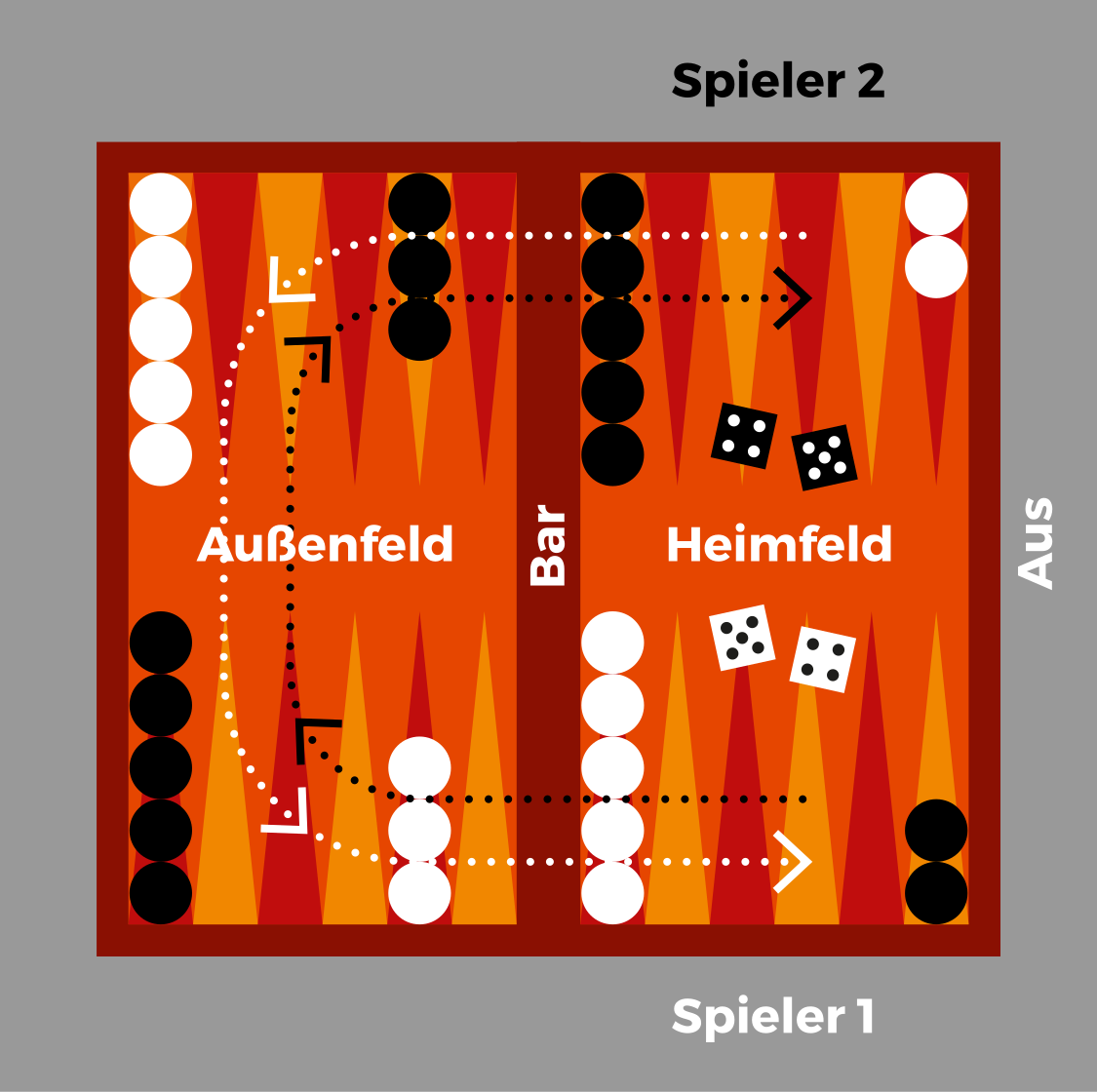
Rolling and moving The players take turns. Whoever is on roll throws two dice to decide how many steps their checkers move. For each die you then move one of your own checkers exactly as many points in your own direction as the die shows.
If you roll doubles (the same number twice), that number is played four times (example: the dice show 5‑5, so 4 x 5 steps/points are played).
A checker may only be set down on a point that is free, held by your own checkers, or occupied by a single opposing checker (that checker can be hit — more on that later).
You can also play both numbers with a single checker, but you have to be able to set each die down on its own (with doubles, each of the four steps) — which means the transit points too must be free, your own, or occupied by a single opposing checker (a hit).
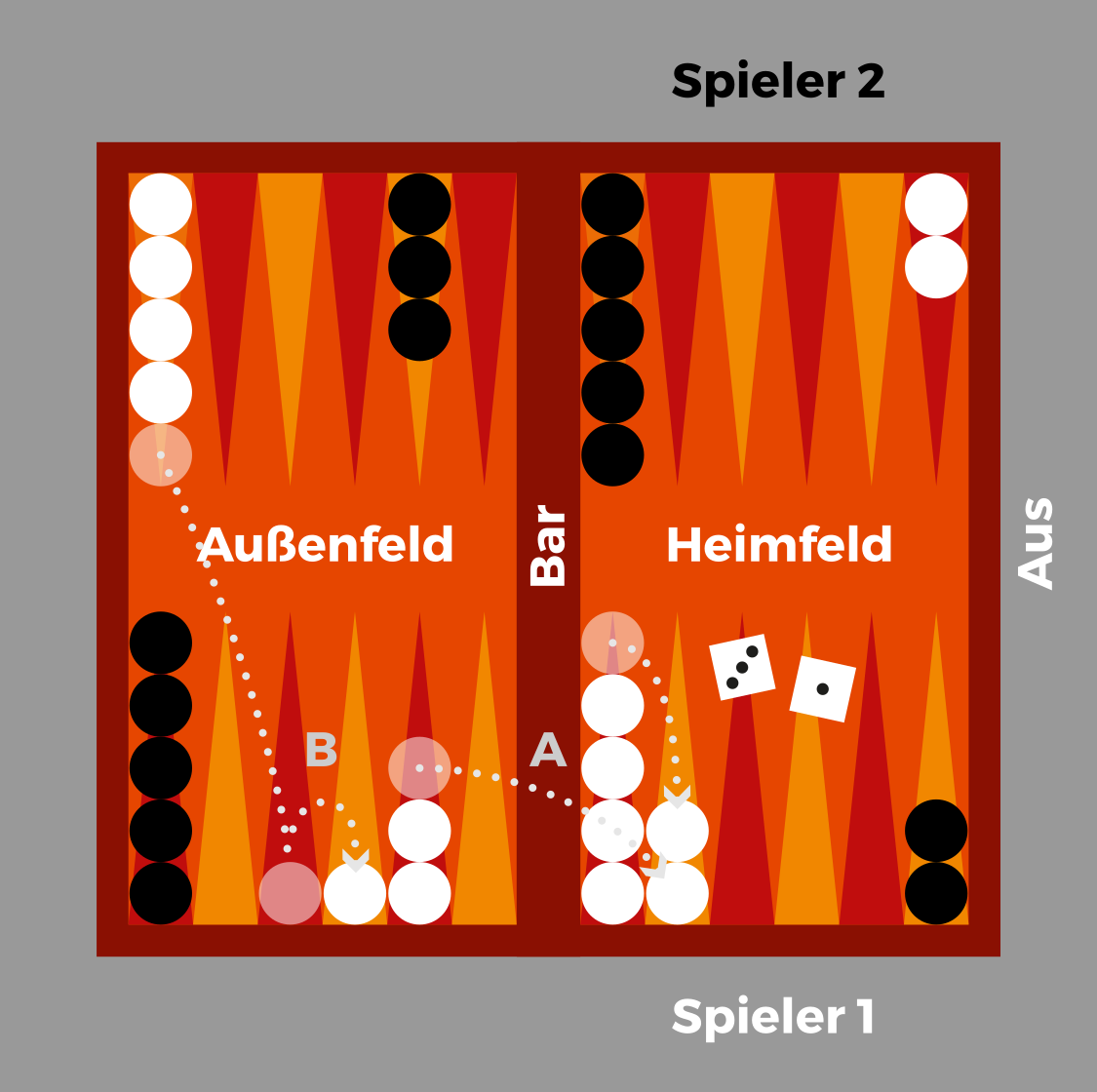
Example: Player 1 rolls 3-1: one checker moves 3 points and another 1 point towards their home board (A). Alternatively, both numbers can be played with a single checker (B).
Hitting If a checker lands on a single opposing checker, that checker is hit and placed on the bar in the middle of the board.
The hit checker on the bar (there may be several) has to be brought back into play by its owner before they may move any other checker.
Entering hit checkers When it is their turn, the affected player rolls as in any ordinary move, but has to use the numbers to enter the hit checker or checkers from the outside of the playing surface into the opponent's home board. Entered checkers start their run in their own direction from the very back again. The count starts at the first point in your own direction of travel.
As in ordinary moves, a checker may only enter on points that are free, your own, or occupied by a single opposing checker. If the checker or checkers cannot be entered, the roll is forfeited and your opponent is on roll.
If one die is enough to enter a hit checker, the number on the other die (with doubles, the remaining numbers) is used to keep moving.
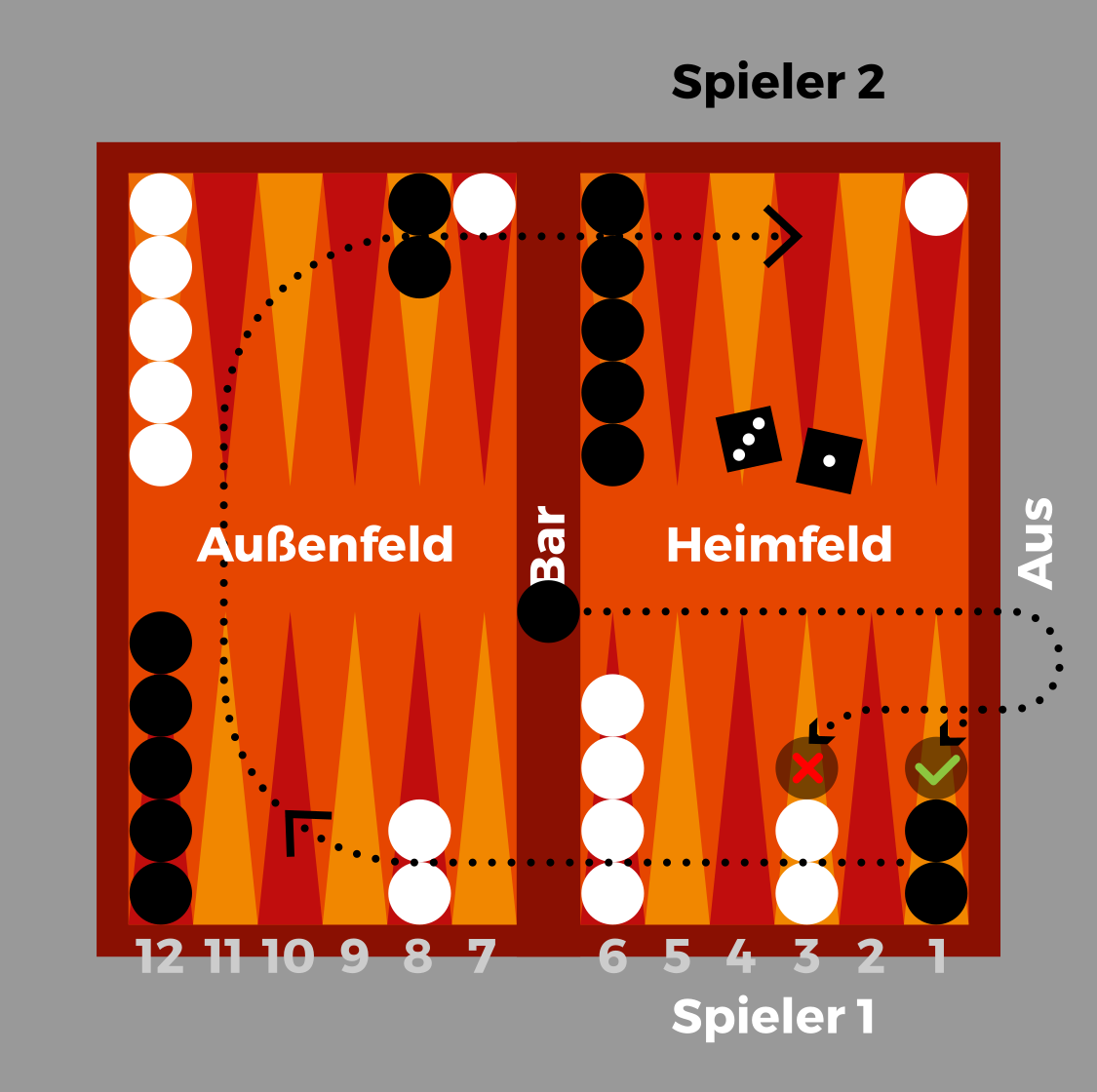
Example: Player 2 (Black) has been hit and sits on the bar with one checker. Now on roll, they throw 3-1: point 3 of the opposing home board is blocked, so the checker can only enter with the 1, and the 3 is left to move on with.
Rolling and forced moves Both dice have to land flat on the playing surface. They may not come to rest on a checker, on the edge of the board, outside the playing surface or leaning against an edge (the dice are “cocked”). If that happens, both dice are rolled again.
Both players are always obliged to play all the numbers rolled, as the rules allow. Numbers that cannot be used (one die or both) are forfeited and the other player is on roll again.
If a player can use both numbers, but not at the same time, they have to use the higher one. Doubles too must be played as far as they can be.
Bearing off and the end of the game Once a player has gathered all fifteen checkers in their home board, bearing off begins. The dice are thrown as usual.
Checkers are taken off the home board when they can travel past the last point and off. If the roll is not enough to bear a checker off, a checker is simply moved closer to the edge. If the roll is higher than needed, one of the checkers furthest from the off tray is borne off.
As a rule, only one checker may be borne off per die. A player is never forced to take a checker off, though, if another move is available.
Whoever bears all of their own checkers off first, wins. Congratulations!
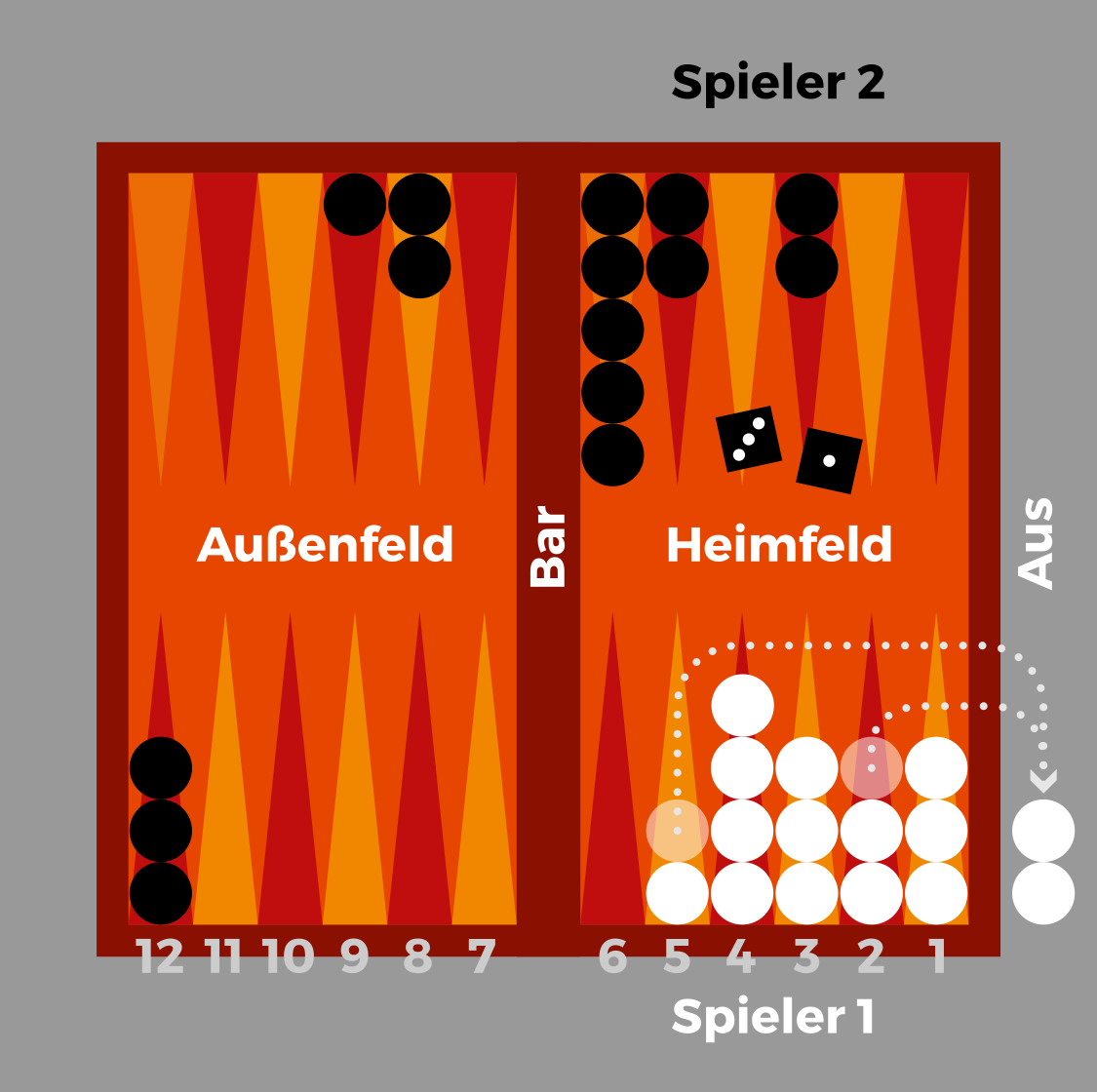
Example: Player 1 (White) is on roll and throws 6-2: there is no checker on point 6, so a checker is borne off from the next lower point (5). The 2 bears a checker off directly from point 2.
Scoring A game can be won single, double (gammon) or even triple (backgammon).
Single: If the loser has borne at least one checker off before the game ends, the winner scores one point.
Gammon: If the loser has not borne a single checker off before the game ends, the winner scores two points.
Backgammon: If the loser has not borne a single checker off before the game ends and still has at least one checker on the bar or in the winner's home board, the winner scores three points.
Extended tournament rules:
The Doubling Cube is a powerful weapon.
The following elements and rules are international tournament standard, and they bring a lot more dynamics and strategic skill into a match in particular.
The doubling cube This cube is not rolled — it multiplies the final result of a game. Its six faces show the numbers 2, 4, 8, 16, 32 and 64 as multipliers.
Use: during a game a player may offer the doubling cube to their opponent, to multiply the points that game is worth. You can only offer the cube when it is your turn and before you have rolled.
The player who is offered a double may decline or accept. If they decline, the game ends there and then and the offering player wins it single, for one point. If the double is accepted, play continues as usual. The accepting player becomes the owner of the cube and may, once it is their turn again, offer a double in return (a redouble).
If the cube has already been turned several times, declining scores its current value for the offering player (for example: the cube has stood at 16 since the last game and is offered at 32 but declined — the offering player wins the game for 16 points).
Beaver If a player accepts a double, they may redouble immediately (a beaver), turning the cube on to the next higher value and keeping it. The player who offered the double may accept or decline as with any ordinary double.
Crawford rule If a player is one point away from winning the match (7 points in an 8-point match, say), the cube may not be used in that game. In the games after it, the doubling cube is available as usual.
Jacoby rule Gammons and backgammons count as a single win (1 point) if neither player has offered a double during the game. This rule speeds a match up, because it removes the situations in which a player avoids doubling in order to play for a gammon or backgammon.
Moves and errors A move is over as soon as the player picks up their dice. If a player makes a wrong or illegal move, their opponent has the right to demand a legal move or to accept the error in silence. As soon as a player rolls or offers a double, their opponent's previous move stands as final.
If a player rolls before the other player has ended their move by picking up the dice, the roll is void.
From beginner to winner.
First: Play often! Next, improve your strategy skills with the BIG FIVE: Blitz, Running, Holding, Priming and the mighty Back Game.
I wanna winOf glory and gloom.
From the dark age to the golden era – the game of thrones and plebs like us has loads of gems and gossip to tell.
I'm curiousTrain that tongue.
Our glossary explains the most important terms of backgammon jargon.
Become a native speaker